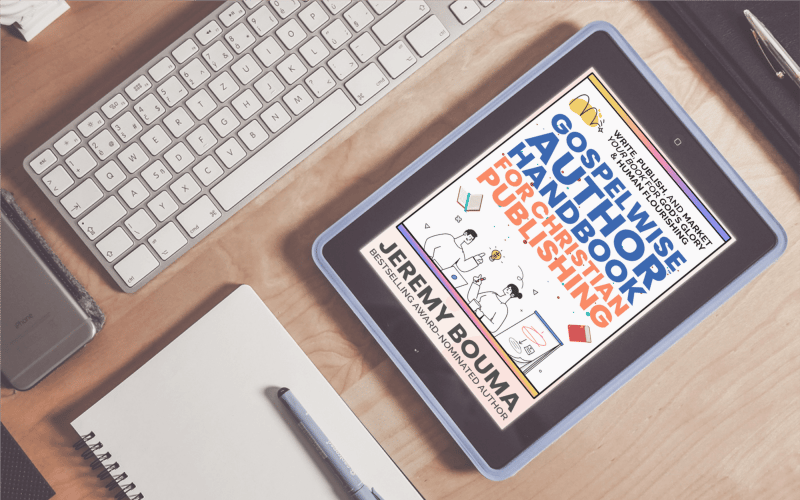
Some craft tips to start the year right
When it comes to writing a book in this modern publishing world, there is so much to figure out, so much to know. Not only about the process of publishing but also the process of writing. You’ve got genre expectations and character development, structure and tropes on the story side of things. Then the research and turns of phrases, the devotional care and inspiring insight that goes into nonfiction resources.
Knowledge is power, they say. But not knowing what you don’t know is half the battle — especially when it comes to the act and art of writing.
So I’m sharing some knowledge bombs today (or perhaps truth bombs, as the kiddos say these days) that I’ve learned along my own author career to give you some writerly insights for your author journey.
Here are 3 tips I’ve picked up writing and publishing for a decade and a half.
Some of these tips are things I’ve learned through hard-fought lessons putting my back into my keyboard. Others I’ve gleaned from writers who have gone before me to hoe their own bookish fields. I hope they are helpful as you consider your own writing journey.
TIP #1. Know Your Pace (and Add a Sprint)
Half the battle with writing is knowing yourself, your hourly pace and how much you’re able to write and when. So find out!
How many words can you write in a half hour, or an hour with a 5-minute break?
Sit down and write something, a short story or article, keep track of your word count, and time your session. Then do it again, for several days in a row. Over a few weeks, track your average, especially when that window of creativity is wide open and the words just flow. (Psst: Free tool alert! CLICK to snag my own word count tracker.)
I’ve got a pretty average 1000 words-an-hour pace. If I cycle back during that process to edit what I wrote in a previous session, then maybe 900. Sometimes I can get to 1200 if I’m really in it. Since this is my vocation, I can schedule a good two-hour block in the morning. In the evenings after dinner, I’m often able to put in 40-50 minutes, and can usually write 700-800 words, finishing my count goals for the day.
Knowing these numbers have helped me plan my year (see tips #2 and #3), and my author career.
If writing is a side thing for now, you may only have an hour in the morning or over your lunch break. Maybe it’s the 30-minute commute or a window between dinner and your kiddo’s bedtime routine (been there!)
Regardless, mapping your pace and writing rhythm is crucial to your writing and publishing ministry.
***An extra tip for you: Add a sprint! That evening writing session involves me and a go-to vintage jazz vinyl record, usually something from Dexter Gordon, Donald Byrd, or McCoy Tyner. Each of those twelve-inch black discs are around 20 minutes of listening pleasure — giving me a solid sprint of writing pleasure!
Because it’s a familiar music experience, and I’ve trained myself with a few LPs, my creative brain is totally dialed into the story I’m writing, giving me a good 700-800 word evening writing sprint. The combination between the timed exercise and dedicated time, along with the familiar music, has gone a long way in training the creative part of my brain.
When you’ve got that pace, and know how much you can write a day, that’s where the math comes in.
TIP #2. Do the Math (It Never Lies)
There’s a well-worn (and a bit worn out!) saying that the best way to eat an elephant is one bite at a time. The meaning is clear: do big things with little steps. Same could be said of writing a book.
How do you write a book? One word at a time! That’s where math comes in.
A solid, modern adult fiction novel is 80,000 to 100,000 words. About half that for a nonfiction book. So let’s split the difference and go with a 90,000 word figure. Calculate how many words you write in an hour (as I said above, around 1,000 for me, depending on the day, but let’s say 900).
At 900 words an hour, it will take me around 100 hours to write my novel. Writing an hour a day will take me just over three months to finish—four if I take weekends off. Not too bad! With a bit of editing, you could easily write 2-3 books a year at that pace.
Sounds like a lot, especially when traditional routes only let you publish a book a year. But in this modern 2.0 publishing world, creating is an important part of being an independent author. And by those 1.0 standards, even 2 books a year is downright prolific!
In five years, you’ll have 10 books under your belt, maybe three trilogies and a standalone novel. If you focus on writing and publishing a book a quarter — totally doable, given the realities of math and pacing (see tip #1) — in that same you’ll have stocked your bookshelves with 20 or so stories or resources.
That’s a solid publishing pace! Goes to show math doesn’t lie.
When you wonder and worry how you can build your GospelWise author career and portfolio, figure out how much you can write, when you can write, and breathe easy knowing your words will add up like quarters in a jar!
And when you follow the numbers, not only will you give your books a solid start at discoverability. You’ll also set yourself up for serving your reading neighbor — delighting them with stories and inspiring them with resources that connect them to the heart of God.
TIP #3. Schedule Your Writing
Knowing how much you can write and how often gives you clarity about how much you can publish. But if you really want this, want to ignite faith in your world, tell stories that transform, and share insights that inspire, then you’ve got to plan for it to happen.
Which means you need to schedule, to plan for it, especially when you’re most creative.
When do you have time to write? Maybe on your lunch break? In the morning before work or school? During your commute or your kid’s sport practice? After dinner before TV time (or in place of TV time)? Perhaps more important: when are you most creative? And how can you schedule it to make it happen?
Fact of the matter is, we plan for what we’re passionate about. Whether that’s budgeting for a family trip, mapping out classes for a degree with a career in mind, or even planning to meet up with friends. If you feast on words and live for prose and poetry, and if you truly want the sort of GospelWise author impact writing and publishing offers, then you’ll make space in your daily rhythm to write.
Because the other fact of the matter is writers write. So do it! Find the time that works for you to delight and inspire the readers God has in store for you. Again, it can be as little as an hour — giving you the window you need to write and publish 2-3 books a year, depending on your pace (see tips #1 and #2!)
It might also mean giving something up to make that time. Most Netflix episodes are around that hour mark, and maybe your lunchtime or after-work happy hour could be better used to serve your reading neighbor.
So what’s the window of time you can use (even sacrifice) to wield the pen for the sake of the cross?
My writing time is generally between 9:30 am and noon. It’s when I’m most creative and have the most time during my day. Sometimes I also fit in another session after dinner when the kids are going to bed. So I guard that time, in the morning and sometimes in the evening, with my life! I (generally) don’t schedule anything during that time, and my family knows this time is sacred.
I’d encourage you to try for the same, scheduling that hour (or two) and making it a habit, daily and weekly — stewarding your time and gifts to create what the Lord has laid on your heart, offering the fruits of your labor to God as a sacrifice to use as he pleases, for his glory and your neighbor’s good.
There you go. Some practical tips, even some advice, from one writer to another, trying to pay forward what I’ve learned along the way. Know your pace (with an added sprint). Do the math (it never lies). Schedule your writing (with a dose of sacrifice).
These three tips are foundational to my writing process and daily rhythm. It’s what’s helped me write and publish several books and series a year for almost two decades now. Hope they help you craft your own rhythm and offer insight into how you yourself can wield the pen for the sake of the cross!
Let’s create for Christ together 🖊️
/ jeremy